Melanotan-1 Research Peptide
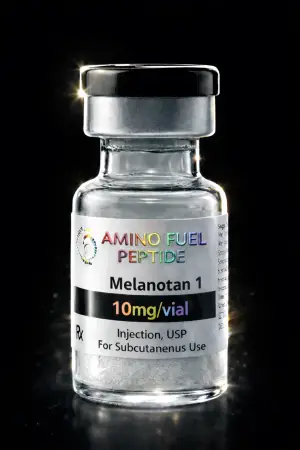
Melanotan-1 is a α-msh linear analog supplied by Amino Fuel Labs for laboratory research in melanocortin receptor pharmacology, photoprotection research, erythropoietic protoporphyria studies. This listing covers a single lyophilized powder configuration, each released against a batch-specific third-party Certificate of Analysis reporting 99.3% purity by reversed-phase HPLC. Vials ship from our US facility with lot documentation matching the exact batch you receive. Research use only.
$55.00 — In stock, ships same business day
Melanotan-1 Research Overview
Melanotan-1 is a synthetic 13-amino-acid analog of α-MSH developed at the University of Arizona. Marketed pharmaceutically as Scenesse (Afamelanotide), it was approved by the FDA in 2019 for the rare genetic disorder erythropoietic protoporphyria.
Available Melanotan-1 Research Strengths
- 10mg — $55.00 · SKU AFL-28 · In stock
Purity and Laboratory Testing
Lot AFL-MT1-10-2026-001 (tested 2026-03-17) of Melanotan-1 was assayed by an independent laboratory using reversed-phase HPLC for purity and mass spectrometry for identity confirmation, returning 99.3% purity. The Certificate of Analysis shipped in the box matches the lot number printed on the vial.
Technical Product Information
- Molecular formula: C₇₈H₁₁₁N₂₁O₁₉
- Molecular weight: 1646.85 g/mol
- Sequence: Ac-Ser-Tyr-Ser-Nle-Glu-His-D-Phe-Arg-Trp-Gly-Lys-Pro-Val-NH₂
- Physical form: Lyophilized Powder
- Purity: 99.3% (RP-HPLC)
- Storage: -20°C (Freezer)
- Classification: α-MSH Linear Analog
- Package contents: 1 × 10mg vial of Melanotan-1, batch-matched Certificate of Analysis, and handling documentation.
Molecular formula C₇₈H₁₁₁N₂₁O₁₉, molecular weight 1646.85 g/mol, sequence Ac-Ser-Tyr-Ser-Nle-Glu-His-D-Phe-Arg-Trp-Gly-Lys-Pro-Val-NH₂. Melanotan-1 selectively activates the MC1R receptor on melanocytes, upregulating eumelanin synthesis. The result is increased skin pigmentation that is photoprotective — the basis for both its tanning research and its approved use in light-sensitivity disorders. Melanotan-1 is supplied as lyophilized powder and is classified in our catalog under α-msh linear analog for α-msh linear analog work. Recorded research categories for this compound include melanocortin receptor pharmacology, photoprotection research, erythropoietic protoporphyria studies, uv-induced skin damage research. Handling notes: store at -20°c (freezer), protect the vial from light, and avoid repeated freeze–thaw cycles once reconstituted. Amino Fuel Labs publishes no dosing protocol for Melanotan-1: the compound is distributed for in-vitro and preclinical laboratory research only and is not intended for human or veterinary use.
Certificate of Analysis
View the Melanotan-1 Certificate of Analysis for the current lot, including HPLC purity and mass-spectrometry identity data.
Frequently Asked Questions
Melanotan-1 vs Melanotan-2 — which is which?
Melanotan-1 (Afamelanotide) is selective for MC1R — pigmentation only. Melanotan-2 is a non-selective melanocortin agonist hitting MC1/3/4/5 — also drives libido and appetite suppression but with more side effects.
Is Melanotan-1 approved as a drug?
Yes. Marketed as Scenesse (Afamelanotide), it's FDA-approved for erythropoietic protoporphyria. It is not approved for cosmetic tanning.
What purity is your Melanotan-1?
≥99.3% HPLC purity, mass-spec verified, COA included.
What is Melanotan-1 studied for?
Melanotan-1 appears in laboratory research covering skin pigmentation, photoprotection, dermatology research. All references describe in-vitro and preclinical study models only.
Does Melanotan-1 include a Certificate of Analysis?
Yes. Each Melanotan-1 lot ships with a batch-specific third-party Certificate of Analysis reporting 99.3% purity by reversed-phase HPLC alongside mass-spectrometry identity confirmation.
What form does Melanotan-1 arrive in?
Melanotan-1 is supplied as lyophilized powder in a sealed vial, packed with the lot documentation for the exact batch shipped.
Related Research Products
- TB-500 research peptide — Frequently referenced alongside Melanotan-1 in thymosin peptide literature.
- BPC-157 research peptide — Frequently referenced alongside Melanotan-1 in gastric pentadecapeptide literature.
- ARA-290 research peptide — Frequently referenced alongside Melanotan-1 in epo-derived peptide literature.
- DSIP research peptide — Frequently referenced alongside Melanotan-1 in neuropeptide literature.
Research Use Only
Melanotan-1 is supplied strictly for laboratory research use. It is not a drug, food or cosmetic and is not intended for human or veterinary use, consumption, diagnosis, treatment or prevention of any condition. Amino Fuel Labs publishes no human dosing or administration guidance.
Browse all research peptides for sale · View third-party lab reports · Read the research peptide FAQ