
Table of Contents
- Why Buying Research Grade Peptides Online Requires More Than a Catalog
- What Separates Reliable Research Peptide Suppliers From the Rest
- How to Read a Research Peptide Certificate of Analysis
- HPLC Peptide Purity Testing: What the Numbers Actually Tell You
- Pricing, Bulk Ordering, and Custom Synthesis Options
- Research Peptide Storage and Handling After Delivery
- Research-Use-Only Compliance and Responsible Purchasing
- Conclusion
- Frequently Asked Questions
Last Updated: October 18, 2026
Why Buying Research Grade Peptides Online Requires More Than a Catalog
Buying research grade peptides online is a documentation exercise as much as a purchasing decision. At Amino Fuel Labs, we tell every new researcher the same thing: the vial is the easy part. The paperwork behind it is what protects your study.
Most supplier pages look identical. A purity claim, a product photo, a price. What separates a usable vendor from a liability is what happens before the vial ships: lot-specific testing, chain of custody, and a certificate that actually matches the compound in your hand.
Below, we break down how to evaluate research peptide suppliers, how to read analytical results, and where the real costs hide. But first, here is what most buying guides get wrong: they treat purity percentage as a single number. It is not. Purity, peptide content, and salt form are three different measurements, and conflating them is how researchers end up with underdosed experiments.
What Separates Reliable Research Peptide Suppliers From the Rest
Reliable research peptide suppliers share four traits: lot-matched third-party testing, published analytical methods, transparent fulfillment tracking, and a clear research-use-only position. Everything else is marketing.
Start with the testing question. Ask whether the Certificate of Analysis comes from an independent lab or was generated in-house. An in-house document can be accurate, but it is not independent verification. Independent testing costs the supplier money, which is why it shows up as a pricing difference.
Next, check the method. HPLC peptide purity testing and mass spectrometry answer different questions. HPLC tells you what percentage of the chromatogram is the target peak. Mass spectrometry confirms the compound's molecular identity. A serious supplier publishes both.
Then look at fulfillment. Tracked U.S. shipping and a stated turnaround window matter more than a "fast shipping" banner. If a supplier cannot tell you where a package originates or when it will arrive, your timeline is at risk.
We built our own process around these four checkpoints because they are the ones researchers audit. When a lab asks to verify our third-party lab relationships, we can walk them through lot matching from synthesis record to shipped vial.
How to Read a Research Peptide Certificate of Analysis
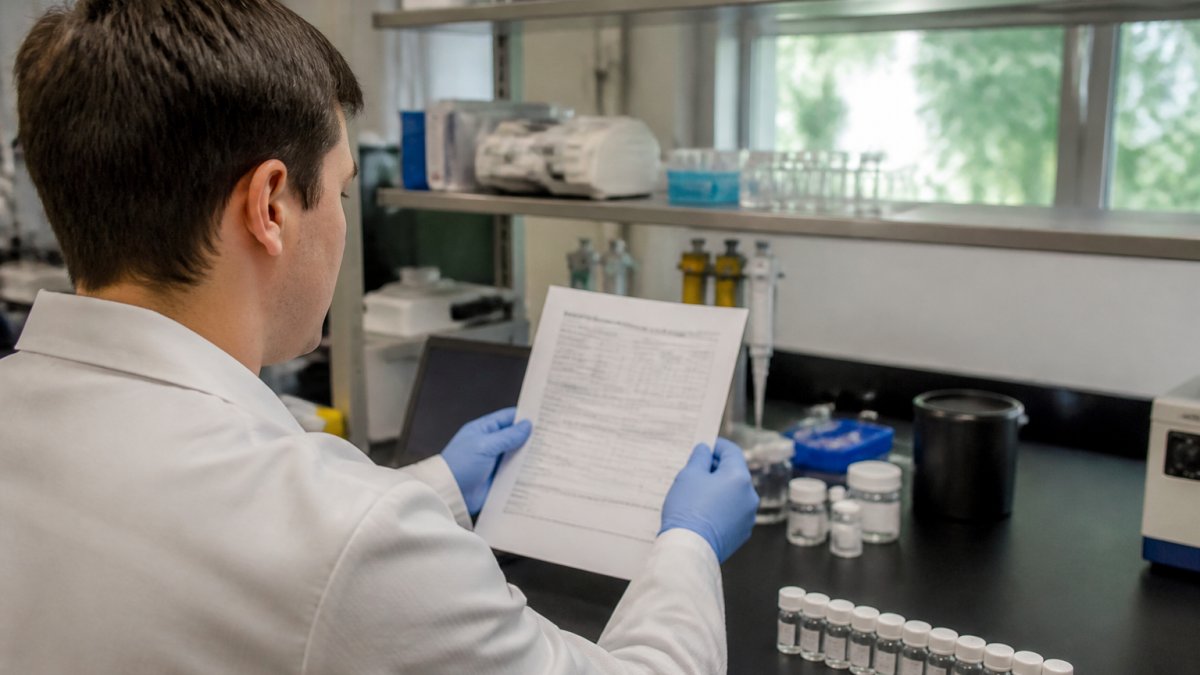
A Certificate of Analysis is a lot-specific document reporting the analytical results for one batch of material. It should name the compound, the lot number, the test methods, the results, and the testing laboratory.
Read it in this order:
- Compound and lot number. Confirm both match your order and the vial label.
- Purity percentage. Note the method used. HPLC purity is standard; a bare percentage with no method is not verifiable.
- Peptide content. This is the actual mass of peptide, separate from purity. Purity accounts for related substances; content accounts for moisture, salts, and counterions.
- Molecular weight confirmation. Mass spectrometry should confirm the expected mass.
- Appearance and solubility. Reported as observed, not predicted.
- Testing laboratory. Named, independent, and reachable.
The peptide content line is where most researchers get burned. A vial labeled 99% pure can still contain meaningfully less peptide by mass once moisture and counterions are counted. If a supplier reports purity but never reports content, you cannot calculate how much compound you are actually weighing out.
HPLC Peptide Purity Testing: What the Numbers Actually Tell You
HPLC peptide purity testing separates a sample into its components and reports the area percentage of the target peak. A 98% result means 98% of the detected material eluted as the target compound, not that the vial is 98% peptide by weight.
That distinction matters for reproducibility. Two vials can both read 98% pure and still deliver different amounts of active material if their peptide content differs. This is the gap the brand's customers ask about most often, and it is a fair question. The answer lives in the content calculation, not the purity number.
Chromatogram quality also matters. A clean baseline and a sharp, symmetric target peak suggest good synthesis and purification. A broad peak, a messy baseline, or a large shoulder can indicate incomplete purification or degradation. Ask for the actual chromatogram, not just the summary percentage.
Mass spectrometry complements HPLC by confirming identity. HPLC says "one dominant thing is here." Mass spectrometry says "that thing is the compound on the label." You want both on file for every lot.
Pricing, Bulk Ordering, and Custom Synthesis Options
Pricing for research grade peptides is not a single number. It is a function of four variables: synthesis scale, sequence length and complexity, documentation package, and fulfillment terms. Most supplier pages show a per-milligram or per-vial price and stop there. That number is only useful if you know what it includes and what it excludes.
Here is the cost structure researchers should map before requesting a quote:
| Cost Factor | What Drives It | What to Ask Before You Commit |
|---|---|---|
| Synthesis scale | Milligrams vs. grams; resin loading and coupling cycles | Is pricing tiered by quantity, and where are the tier breaks? |
| Sequence length and complexity | Number of residues, hydrophobic stretches, difficult couplings | Is there a minimum for custom sequences, and how is difficulty priced? |
| Documentation | Lot-matched third-party CoA, HPLC chromatogram, MS spectrum | Is testing included in the list price or billed as an add-on? |
| Fulfillment | Packing configuration, cold-chain options, tracked shipping | What is the stated turnaround window, and is tracking standard? |
| Lot size | Single lot vs. multi-lot bulk allocation | Does each bulk lot carry its own lot-matched CoA? |
A common pattern is that the quoted price per milligram falls as scale rises, but the documentation cost does not scale down with it. If a bulk quote is cheaper per unit but the Certificate of Analysis is no longer lot-matched to each batch, the effective cost of a verifiable experiment has gone up, not down.
Bulk and wholesale arrangements usually involve three questions: minimum order quantity, lead time from order to ship, and whether custom synthesis is available alongside catalog compounds.
Custom synthesis pricing depends on sequence length, synthesis scale, purification requirements, and documentation. A quote request should include the sequence, the quantity, the purity target, and the documentation you need.
For current catalog pricing and availability, check the online catalog or request a quote. A quote is the only price a supplier should stand behind, because it is the only one tied to your specific scale, sequence, and documentation requirements.
Research Peptide Storage and Handling After Delivery
Storage and handling determine whether a verified batch stays verified. Most lyophilized research peptides are stable at controlled temperatures for extended periods, but the specifics depend on the compound, the salt form, and the conditions the vial experienced in transit. This is the part of sourcing most buying guides skip, and it is where a documented supplier separates from a catalog.
Start with receipt inspection. When a package arrives, check three things before opening: the outer packaging for damage or temperature-excursion indicators, the lot number on the vial label against the lot number on the Certificate of Analysis, and the appearance of the lyophilized cake against the reported appearance on the CoA.
General handling principles for lyophilized material:
- Store cold and dry, protected from light, at the temperature range stated on the product page or CoA.
- Let vials equilibrate to room temperature before opening to avoid condensation on the cake.
- Use appropriate laboratory solvents for reconstitution and follow the compound's documented solubility rather than a generic protocol.
- Aliquot reconstituted material to reduce freeze-thaw cycling, and label each aliquot with lot number and reconstitution date.
- Record lot numbers, receipt dates, and reconstitution dates in your lab notebook so the chain of documentation stays intact.
Shipping conditions deserve the same scrutiny as storage. Temperature excursions in transit can affect material, so ask how orders are packed, whether cold-chain or insulated options exist for sensitive compounds, and whether the shipment includes any temperature indicator. Tracked fulfillment lets you see when a package arrives and flag anything unusual before you open it.
Handling guidance should travel with the lot, not just the order confirmation. Keep the CoA, the packing slip, and your receipt-inspection notes together so that if a batch is ever questioned, you can show what arrived, when it arrived, and how it was stored from that point forward.
Research-Use-Only Compliance and Responsible Purchasing
Research-use-only labeling means the material is sold for laboratory investigation, not for human or veterinary use. That designation carries real weight, and responsible purchasing means respecting it.
Compliance starts with documentation. Keep the Certificate of Analysis, order records, and internal usage logs on file. Institutions with strict supplier requirements will ask for traceability, and a supplier who can produce lot-matching records from synthesis through shipment makes that audit straightforward.
Responsible purchasing also means buying from suppliers who state their research-use-only position plainly. Vague language about "wellness" or "performance" on a research chemical listing is a red flag, not a marketing quirk.
FDA guidance on compounding and research chemicals
If your institution requires supplier verification, ask about audit access. A supplier should be able to explain how lots are tracked and how third-party lab relationships are documented. If that conversation is evasive, treat it as a finding.
Conclusion
The hardest part of sourcing research grade peptides is not finding a catalog. It is confirming that the documentation behind each vial holds up to scrutiny. Purity claims are easy to print; lot-matched analytical results are not.
Amino Fuel Labs builds every order around that distinction. We provide 99%+ HPLC purity with lot-matched third-party Certificates of Analysis, accessible HPLC and MS lab reports, fast U.S. shipping with reliable tracking, and 24/7 support when a question comes up mid-study. If your lab needs to verify a lot, we will walk you through it.
Get started with Amino Fuel Labs and source your next batch with documentation you can actually audit.
Frequently Asked Questions
How can researchers evaluate an online peptide supplier?
Start with documentation. Ask for a lot-matched certificate of analysis from an independent lab, not a generic sample. Check that the COA includes HPLC purity percentage, mass spectrometry identity confirmation, and the specific lot number. Look for transparent shipping terms, a clear research-use-only disclaimer, and responsive support. A supplier who cannot or will not share verifiable analytical results for the exact batch you are buying is a risk, regardless of how polished the website looks.
What does research grade mean for peptides?
Research grade means the peptide is produced for laboratory investigation, not for human or veterinary use. It should meet documented specifications for purity, identity, and quality control, typically verified by third-party testing. The label does not guarantee a specific purity level on its own; you need the certificate of analysis for the lot to confirm what you are receiving. Research grade also signals that the supplier expects the buyer to handle and store the material appropriately for experimental work.
How can you verify a peptide's purity?
Request the lot-specific certificate of analysis and review the HPLC chromatogram. The purity percentage reflects the main peak area relative to all peaks, but it does not account for moisture, salts, or residual solvents. Pair HPLC with mass spectrometry to confirm molecular identity. If the supplier offers only a purity claim without supporting data, ask for the raw analytical report. Independent verification through your own lab is the most reliable check for critical studies.
Are research peptides intended for human use?
No. Research grade peptides sold online are intended for laboratory research only. They are not approved by the FDA for human or veterinary use, and they are not manufactured under pharmaceutical quality standards. Researchers should follow institutional guidelines for handling and disposal, and anyone considering human use should consult a qualified medical professional. Buying research peptides does not imply safety or efficacy for any human application.